Es mostren les entrades ordenades per rellevància per a la consulta sunstein. Ordena per data Mostra totes les entrades

19 de març 2026

Podem reimaginar-nos una nova democràcia? (5)

On Liberalism: In Defense of Freedom

 Aquest és un resum del llibre "On Liberalism: In Defense of Freedom" (2025), de Cass R. Sunstein, que analitza el liberalisme com una tradició en evolució i sota pressió.

1. Fonaments i definició del liberalisme

El liberalisme no és una ideologia estreta, sinó una "gran carpa" que prioritza la llibertat (associada a l'agència humana) i el pluralisme. Sunstein el defineix a través de sis pilars: llibertat, drets humans, pluralisme, seguretat, estat de dret i democràcia deliberativa. Històricament, el terme "liberal" prové de la "liberalitat" (generositat i esperit obert cap al bé comú), i no es va convertir en un concepte polític fins a la França de principis del segle XIX, amb figures com Madame de Staël, per defensar la llibertat contra l'egoisme i l'autoritarisme.

2. El "Constitucionalisme d'Experiments de Vida"

Inspirant-se en John Stuart Mill, Sunstein proposa que l'essència del liberalisme és protegir els "experiments de vida".

  • Agència individual: Cada persona ha de ser l'autora de la seva pròpia narrativa vital, provant diferents camins en la religió, la família, la feina o el sexe.
  • Benefici social: Aquests experiments no només ajuden l'individu, sinó que permeten que la societat aprengui del que funciona i del que fracassa, evitant la "tirania de l'opinió" i la conformitat.
  • Límit del dany: L'estat només ha d'intervenir quan un experiment causa un dany directe a tercers, tot i que Sunstein reconeix que definir aquest dany és un dels reptes més grans del liberalisme.

3. El debat entre Mill i Hayek

Sunstein analitza la tensió entre dos gegants liberals:

  • Friedrich Hayek: Representa el liberalisme clàssic que venera les tradicions i els "ordres espontanis" com el mercat, advertint contra l'arrogància de voler planificar la societat des de dalt.
  • John Stuart Mill: És un reformador progressista que veia les tradicions sovint com a opressores (especialment per a les dones) i defensava l'excentricitat com un servei a la societat.
  • La influència d'Harriet Taylor: Sunstein destaca que la relació de Mill amb Taylor va ser fonamental per al seu liberalisme radical, movent-lo cap a la defensa de la igualtat de gènere i la crítica als costums socials restrictius.

4. L'Estat de Dret (Rule of Law)

L'estat de dret és el "àncora" de la llibertat i es defineix per set característiques essencials: (1) regles clares i generals, (2) publicitat de les lleis, (3) no retroactivitat, (4) conformitat entre la llei escrita i la real, (5) dret a una audiència justa (degut procés), (6) separació entre legisladors i intèrprets, i (7) estabilitat legal. Sunstein aclareix que l'estat de dret no és el mateix que la democràcia o la llibertat d'expressió, sinó un ideal distintiu que garanteix la predictibilitat i protegeix el ciutadà d'un govern arbitrari.

5. Llibertat d'expressió i veritat

Sunstein defensa una protecció àmplia de la llibertat d'expressió, incloent el "pensament que odiem" i fins i tot certes falsedats.

  • Efecte dissuasiu (Chilling effect): Si el govern tingués el poder de castigar tota falsedat, els ciutadans deixarien de dir veritats per por a equivocar-se.
  • Veritats vives vs. dogmes morts: Mill argumentava que el xoc amb l'error fa que la veritat catch fire (s'encengui) i es converteixi en una convicció real en lloc d'una acceptació passiva.
  • Confiança en el procés: El liberalisme prefereix convèncer les persones mitjançant el contraargument que silenciar-les mitjançant la prohibició.

6. Mercats lliures i Economia del Comportament

Tot i valorar el mercat per la seva capacitat d'agregar coneixement dispers (com deia Hayek), Sunstein introdueix la "falla de mercat conductual".

  • Biaixos humans: Les persones pateixen de biaix de present (prioritzar el curt termini) o optimisme irreal, cosa que pot portar-les a prendre decisions que perjudiquen el seu benestar futur.
  • Nudges i mandats: Això justifica l'ús de "nudges" (petites empentes informatives) o fins i tot mandats coercitius en casos greus (com el cinturó de seguretat o impostos al tabac) per protegir les persones dels seus propis errors sense aniquilar l'agència.

7. La Segona Carta de Drets de FDR

Sunstein abraça la visió de Franklin D. Roosevelt, segons la qual "els homes necessitats no són homes lliures".

  • Drets econòmics: El liberalisme ha de garantir el dret a la feina, l'educació, l'habitatge i l'atenció mèdica per assegurar la seguretat material incondicional.
  • Mite del laissez-faire: Rebutja la idea que els drets de propietat existeixen sense l'estat; la propietat és una creació legal protegida per fons públics, de manera que la redistribució és perfectament compatible amb la llibertat.

8. Oportunitat i el paper de la sort

En el capítol final, el llibre reflexiona sobre els "Einsteins perduts": persones amb gran talent que mai triomfen per falta d'oportunitats o mala sort. Utilitza l'exemple de la cantant Connie Converse per mostrar com la "loteria natural" de naixement determina el destí. El liberalisme ha de treballar per desfer les formes de subjecció que impedeixen que el talent floreixi, promovent una societat de "carreres obertes als talents".

Sunstein conclou que el liberalisme és una "fe de lluita" (fighting faith), plena d'esperança i optimisme, que es reconstrueix cada dia per oposar-se a la crueltat i celebrar la llibertat.

PS. En Ramon Resina fa una apologia del liberalisme i l'encerta.

PS. Una crítica al liberalisme apàtic de Sunstein.

PS. I en Sunstein contesta la crítica.

PS. Al seu blog.

PS. Habermas ha traspassat.

PS. Conversa amb Yasha Mounk.

PS. Presentació magistral a Stanford, youtube per guardar.

"More than in any time since World War II, liberalism is under a lot of pressure. Even siege. There’s a lot of marching up and down. People are cheering. Many of them seem to hope to have found Big Brother. On the right, some people have given up on liberalism. They are in the academy. They hold it responsible for the collapse of traditions and values, disrespect for authority, immorality and criminality.

On the left, and I might say this project originated at the University of Chicago long ago as a response to the left, some people despise liberalism. They see it as old and exhausted and dying and listless. They think it lacks the resources to handle entrenched inequalities, corporate power, and environmental degradation. They refer to neoliberalism with disdain. Have you noticed?

Fascists don’t like liberalism at all. So do populists who think freedom is overrated. In ways large and small, anti-liberal is on the march. Among historians, its standard defined the origins of liberalism in French, German, and British thinkers. A while ago, but not that long ago, but before there was the word liberalism, there was the word liberal, which referred to character traits, openness of spirit, generosity, a commitment to the common good."


 Liberals have a holy trinity: freedom, pluralism, and the rule of law. The first central commitment of liberal thinkers of all kinds. They may understand freedom, pluralism, and rule of law in different ways, but those stand at the heart of liberal commitments.


PS. Avui, dia de Sant Josep, el blog ha superat el milió de visites. Gràcies per la confiança.


18 de novembre 2024

Com prenem decisions

Decisions about Decisions: Practical Reason in Ordinary Life 

El llibre "Decisions about Decisions: Practical Reason in Ordinary Life", escrit per Cass R. Sunstein explora com les persones prenen decisions sobre com prendre decisions, analitzant quan aquestes estratègies són exitoses i quan fallen. El llibre es basa en una sèrie d'assaigs previs de Sunstein, revisats i unificats per a aquesta publicació.

Un dels conceptes centrals del llibre són les "decisions de segon ordre", que són decisions sobre com prendre decisions futures. Sunstein argumenta que les persones utilitzen diverses estratègies per prendre decisions de segon ordre, com ara la delegació, els petits passos, l'elecció aleatòria i l'adopció de rutines. L'autor examina els avantatges i desavantatges de cada estratègia, tenint en compte els costos emocionals, cognitius i d'error associats a cada una.

El llibre també aborda la importància de la informació en la presa de decisions. Sunstein argumenta que, si bé la informació és essencial per prendre bones decisions, de vegades les persones prefereixen no saber, especialment quan la informació podria ser dolorosa o desagradable. L'autor explora els factors que influeixen en la decisió de buscar o evitar informació, incloent el valor instrumental, el valor afectiu i els biaixos cognitius.

A més, Sunstein examina com les creences influeixen en la presa de decisions. L'autor analitza com les persones actualitzen les seves creences quan reben nova informació i com les seves creences prèvies afecten la seva resposta a aquesta informació. Un exemple que s'analitza és el canvi climàtic, on s'observa com les persones amb creences prèvies fortes sobre el tema tendeixen a interpretar la nova informació d'una manera que confirma les seves opinions preconcebudes.

"Decisions about Decisions" també explora la qüestió de les decisions inconsistents, on les persones poden preferir l'opció A a l'opció B en una ocasió, però l'opció B a l'opció A en una altra. Sunstein argumenta que aquestes inconsistències sovint sorgeixen de la manera com s'avaluen les opcions, ja sigui de forma conjunta o separada.

El llibre conclou amb una discussió sobre el dret a no ser manipulat. Sunstein argumenta que les persones tenen dret a l'autonomia decisional i que les estratègies de manipulació, com ara les tàctiques de màrqueting enganyoses o la supressió d'informació, violen aquest dret. L'autor defensa la necessitat de protegir les persones de la manipulació, tant a nivell moral com legal.

"Decisions about Decisions" ofereix una anàlisi profunda i perspicaç sobre com les persones prenen decisions en la vida quotidiana. El llibre combina la teoria econòmica, la psicologia i la filosofia per proporcionar una comprensió més completa del procés de presa de decisions i els factors que l'influeixen.


24 de gener 2026

La manipulació com a robatori

Manipulation: What It Is, Why It's Bad, What To Do About It 

L'obra "Manipulation: What It Is, Why It's Bad, What To Do About It" (2025), escrita per Cass R. Sunstein (pioner de la teoria de l'impuls o nudge), analitza com les noves tecnologies ofereixen oportunitats sense precedents per manipular els ciutadans, comprometent la seva llibertat i el seu benestar. El llibre s'estructura en tres parts: teoria, aplicacions i futur.

I. Teoria: Definint la Manipulació

Sunstein argumenta que, tot i ser un concepte difícil de delimitar, la manipulació es diferencia clarament de la coacció i de la persuasió racional.

  • Definició principal: L'autor proposa que la manipulació és una forma de truc o engany, destinada a afectar el pensament o l'acció, que no respecta la capacitat de l'individu per a la tria reflexiva i deliberativa.
  • Sistema 1 vs. Sistema 2: El llibre utilitza el marc de la ciència conductual per explicar que els manipuladors solen apuntar al Sistema 1 (automàtic, intuïtiu i propens a biaixos) per esquivar el Sistema 2 (deliberatiu i calculador).
  • Per què és dolenta? Segons les fonts, és èticament qüestionable perquè insulta l'autonomia i la dignitat de les persones, tractant-les com a "eines o necis" (tools and fools) en lloc d'agents sobirans. Des d'una perspectiva de benestar, el manipulador sol ignorar els gustos i valors reals de la víctima, imposant els seus propis objectius.
  • Un nou dret: L'autor proposa el reconeixement d'un dret moral i legal a no ser manipulat, especialment en l'àmbit digital.

II. Aplicacions: Enganys i Barreres

Sunstein analitza tres fenòmens moderns on la manipulació és omnipresent:

  1. Deepfakes: Són productes de la IA que creen imatges o vídeos falsos però d'aparença real. L'autor els considera una forma de manipulació "insidiosa" perquè exploten el biaix de veritat de l'ésser humà (la tendència a creure el que veiem) i poden causar danys greus a la reputació i a la democràcia.
  2. Sludge (Fang o Residu Administratiu): Es refereix a les friccions o barreres burocràtiques (com formularis excessivament complexos o dificultats per cancel·lar subscripcions) que impedeixen que la gent faci el que vol. El sludge és una eina de manipulació que roba temps i diners explotant la inèrcia i el biaix del present. Sunstein advoca per fer "Auditories de Sludge" per simplificar la vida dels ciutadans.
  3. El problema de la Barbie (Pressió Social): Descriu situacions on la gent és manipulada per comprar béns o participar en activitats (com les xarxes socials) que desitjarien que no existissin, però que consumeixen per por a l'exclusió o per evitar enviar un senyal social negatiu.

III. El Futur: IA i Nudging Ètic

El llibre tanca explorant com la societat es pot protegir en el futur:

  • Nudging sense manipulació: Sunstein defensa que no tots els impulsos (nudges) són manipuladors. Els recordatoris, les advertències factuals o les auditories de navegabilitat són eines que promouen l'agència en lloc de soscavar-la.
  • Intel·ligència Artificial: Presenta una dicotomia. Per una banda, la IA pot crear "Motors de Decisió" (Choice Engines) personalitzats que ajudin a les persones a superar els seus biaixos i a prendre millors decisions segons els seus propis criteris. Per l'altra, la IA té un potencial "fresc i amenaçador" per explotar les vulnerabilitats humanes de manera quirúrgica.

En conclusió, el llibre és un crit d'alerta contra la manipulació entesa com una forma de robatori de l'autonomia personal. Sunstein sosté que, en l'era dels algorismes, la transparència i l'escrutini públic són els únics salvaguardes efectius per garantir que les persones continuïn sent els autors de les seves pròpies vides.


02 de juny 2017

Compensating behaviour after nudging

Nudges that fail

Cass Sunstein shows in his las published article that nudging may fail, and explains the reasons and what to do. Great, I was waiting for that, because we need to disentangle the current approaches to nudging. the article tries to shed light, but in the end, uncertainties remain.

The general point is that any form of choice architecture, including the use of default rules, may have little or no net effect if people are able to find otherdomains in which to counteract it. The idea of compensating behavior can be seen as a subset of the general category of strong antecedent references, but it points to a more specifi c case, in which the apparent success of the nudge is an illusion in terms of what choice architects actually care about (Hirschman,1991).
What matters is welfare, not effectiveness (Sunstein,2016). A largely ineffective nudge may have positive welfare effects; an effective nudge might turn out to reduce welfare. A strong reason for nudges, as distinguished from more aggressive tools, is that they preserve freedom of choice and thus allow people to go their own way. In many contexts, that is indeed a virtue, and the ineffectiveness of nudges, for some or many, is nothing to lament. But when choosers are making clear errors, and when third-party effects are involved, the ineffectiveness of nudges provides a good reason to consider stronger measures on welfare grounds.
 Therefore with this text Sunstein is landing to the practical difficulties on nudging. Highly recommended.

PS. Congratulations to Adam Oliver, C. Sunstein and G. Akerloff for the new journal.


Pissarro à Eragny - La nature retrouvée
Au Musée de Luxembourg maintenant

17 de març 2026

IA pertot arreu (13)

 Algorithmic Harm. Protecting People in the Age of Artificial Intelligence

El llibre "Algorithmic Harm: Protecting People in the Age of Artificial Intelligence" (2025), escrit per Oren Bar-Gill i Cass R. Sunstein, analitza com l'ús creixent d'algoritmes d'intel·ligència artificial (IA) està transformant els mercats i generant noves formes de perjudici per als consumidors, treballadors i ciutadans. La tesi central de l'obra és que, tot i que la IA pot augmentar l'eficiència, el seu gran poder per diferenciar i personalitzar les ofertes permet explotar sistemàticament les vulnerabilitats humanes.

A continuació se'n presenta un resum detallat estructurat segons els eixos principals del llibre:

1. El marc d'anàlisi: Mercats S vs. Mercats U

Els autors proposen una matriu per entendre quan la IA és beneficiosa o perjudicial, basada en el tipus de consumidor:

  • Mercats S (Sophisticated): Poblats per consumidors ben informats i racionals. En aquests mercats, la diferenciació algorítmica sol ser beneficiosa perquè millora l'encaix entre producte i client, augmentant l'eficiència general, tot i que el venedor sol quedar-se amb gran part del benefici econòmic.
  • Mercats U (Unsophisticated): Poblats per persones amb dèficits d'informació o biaixos cognitius (com l'optimisme irreal o el biaix de present). Aquí, l'algoritme identifica precisament qui és més vulnerable i "enganya" el consumidor perquè pagui preus excessius per productes que no necessita, generant el que anomenen "dany algorítmic".

2. Categories del Dany Algorítmic

El llibre identifica diversos mecanismes a través dels quals els algoritmes causen perjudicis:

  • Discriminació de preus algorítmica: Els venedors utilitzen dades personals per fixar el preu màxim que cada individu està disposat a pagar (WTP). En mercats U, això pot portar a un "surplus negatiu", on el consumidor paga més del que el producte realment val per a ell.
  • Targeting (Selecció de productes): L'IA no només canvia el preu, sinó que ofereix productes inferiors o innecessaris a persones que sobreestimen els seus beneficis (per exemple, assegurances inútils o cures ineficaces).
  • Mispercepcions millorades per la IA: Els models de llenguatge (LLM) poden dissenyar comunicacions manipuladores o falses per exacerbar els biaixos dels consumidors, creant necessitats on no n'hi ha.
  • Coordinació algorítmica (Antitrust): Els algoritmes de venedors competidors poden "aprendre" a col·ludir i mantenir preus artificialment alts sense necessitat d'un acord humà explícit, perjudicant la competència.
  • Discriminació de raça i sexe: Tot i que els algoritmes no tenen "prejudicis inconscients" com els humans, poden perpetuar la discriminació si s'entrenen amb dades esbiaixades o si utilitzen variables (com el codi postal) que actuen com a representants (proxies) de la raça o el sexe.

3. Propostes de Política i Reforma Legal

Davant d'aquests reptes, Bar-Gill i Sunstein proposen tres nivells d'intervenció:

  • Transparència Algorítmica: Defensen el dret dels consumidors a saber quan i com s'estan utilitzant algoritmes per diferenciar preus o ofertes. Proposen l'ús de "protocols de transparència" (com SHAP o LIME) per obrir la "caixa negra" de l'IA i identificar els factors que mouen les decisions.
  • Revisió de l'Impacte Disparat: Proposen aplicar la doctrina de l'impacte disparat (típica de les lleis contra la discriminació racial) per protegir també els consumidors en funció del seu nivell de sofisticació. Si un algoritme castiga sistemàticament els més vulnerables, l'Estat hauria d'intervenir.
  • Regulació Ex Ante: Suggerixen prohibir certs usos dels algoritmes en mercats especialment perillosos o obligar els programadors a incloure "restriccions de no-discriminació" directament en el codi de la IA.

4. Extensions: Mercats Laborals i Polítics

El llibre conclou que aquests danys no es limiten al consum:

  • Mercats Laborals: Els empresaris usen IA per fixar salaris individualitzats i detectar quins empleats acceptarien sous més baixos o pitjors condicions per falta d'informació.
  • Mercats Polítics: Els polítics utilitzen algoritmes per segmentar els votants i enviar missatges altament manipuladors o fake news que exploten les pors i biaixos de la ciutadania, posant en risc la pròpia democràcia.

En resum, l'obra és una crida a l'acció reguladora per garantir que el progrés tecnològic no es converteixi en una eina d'explotació de les debilitats humanes, sinó en un instrument per al benestar social.


17 d’octubre 2010

Paternalisme liberal

Obesity and the Economics of Prevention: FIT NOT FAT

En Thaler diu que no és ben bé un oxymoron. En Becker aplana el camí per a Posner.En Posner diu clarament que si.
No és tant important si ho és o no, més aviat el més important és la rellevància per la política sanitària. I aquí és on ens cal reflexionar de veritat. Al llibre Obesity and the Economics of Prevention: FIT NOT FAT hi ha un capítol suggerent sobre el paper dels governs i el mercat. La referència al paternalisme liberal es resumeix aquí:
Preferences may also be influenced in more subtle ways than through the direct provision of information. An important example is what has been described as setting the default option by advocates of “libertarian paternalism” (e.g. Sunstein and Thaler, 2003). The underlying principle is that individual preferences driving an act of choice tend to be influenced by how the default option is configured. An example of the default option is the routine association of a certain side dish to a main course ordered in a restaurant. Customers may be entitled to demand an alternative side dish, but if they did not exercise this faculty they would receive the standard (default) option. Using a healthy option as a default instead of a less healthy one would have a significant effect on the number of customers eventually choosing to consume the healthy option. Actions involving changes in default options may display varying degrees of interference with individual choice and they may be perceived as more or less acceptable by consumers depending on the nature of the choices they aim to influence. For instance, changing the order in which food is arranged in a company cafeteria (Sunstein and Thaler, 2003) in order to steer consumer choices towards healthy options would seem to be a fairly non-intrusive action. However, other actions based on the same basic principle, i.e. changing the default option, may be perceived as much more intrusive. An example is policies making organ donations a default, with individuals being allowed to opt out upon request, have been viewed as most controversial and have been fiercely opposed in many countries, despite evidence which shows these policies may increase organ donations by as much as 25-30% compared to countries where the default is not consenting to donation (Abadie and Gay, 2006).

I el que fan els països OECD en relació a l'obesitat es resumeix en aquesta figura:


Si l'obesitat és considerada com el factor de risc més important, aleshores convé saber què cal fer. El llibre de l'OCDE mostra l'estat de situació però queda molt camí per endavant. Al McKinsey Quarterly ens diuen que els governs han d'actuar.

16 de març 2017

Falsehood as ingredient of populist health policy

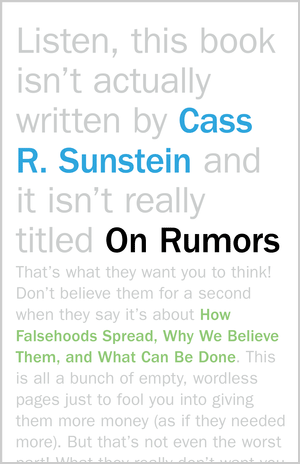
On Rumors: How Falsehoods Spread, Why We Believe Them, and What Can Be Done

Today I would like to suggest you to read Barack Obama in his farewell speech. It's an inspiring piece to understand US and democracies in general. Inequality, racism and polarization are the three key isues to tackle.
He said:
For too many of us, it’s become safer to retreat into our own bubbles, whether in our neighborhoods or college campuses or places of worship or our social media feeds, surrounded by people who look like us and share the same political outlook and never challenge our assumptions. The rise of naked partisanship, increasing economic and regional stratification, the splintering of our media into a channel for every taste – all this makes this great sorting seem natural, even inevitable. And increasingly, we become so secure in our bubbles that we accept only information, whether true or not, that fits our opinions, instead of basing our opinions on the evidence that’s out there.

This trend represents a third threat to our democracy. Politics is a battle of ideas; in the course of a healthy debate, we’ll prioritize different goals, and the different means of reaching them. But without some common baseline of facts; without a willingness to admit new information, and concede that your opponent is making a fair point, and that science and reason matter, we’ll keep talking past each other, making common ground and compromise impossible.
Without a common baseline of facts there is no possibility to talk to your political opponent. Nowadays, fake news like health privatization are continuously spreading without any foundation. Our health minister speaks incredibly about that in our Parliament. Such obsession has driven to submit a new unnecessary law on health contracting.We are now in an obsession focused policy era.
To understand this phenomena, Sunstein wrote a book in 2008, before thee term post-truth era, that explains the basics and what to do.
Cass Sunstein says in the book:
Rumors are nearly as old as human history, but with the rise of the Internet, they have become ubiquitous. In fact we are now awash in them. False rumors are especially troublesome; they impose real damage on individuals and institutions, and they often resist correction. They can threaten careers, relationships, policies, public officials, democracy, and sometimes even peace itself. Many of the most pervasive rumors involve governments—what officials are planning and why.
This small book has two goals. The first is to answer these questions: Why do ordinary human beings accept rumors, even false, destructive, and bizarre ones? Why do some groups, and even nations, accept rumors that other groups and nations deem preposterous? The second is to answer this question: What can we do to protect ourselves against the harmful effects of false rumors? As we shall see, part of the answer lies in recognizing that a “chilling effect” on those who would spread destructive falsehoods can be a truly excellent idea, especially if those falsehoods amount to libel.
Sensible people believe rumors, whether or not they are true. On the Internet, self-interested, malicious, and altruistic propagators find it increasingly easy to spread rumors about prominent people and institutions. Such rumors cast doubt on their target’s honesty, decency, fairness, patriotism, and sometimes even sanity; often they portray public figures as fundamentally confused or corrupt. Those who are not in the public sphere are similarly vulnerable.
Rumor transmission frequently occurs as a result of cascade effects and group polarization. Indeed, rumors spread as a textbook example of an informational cascade: imperfectly or entirely uninformed people accept a rumor that they hear from others, and as more and more people accept that rumor, the informational signal becomes very strong, and it is hard for the rest of us to resist it, even if it is false.
Group polarization also plays a large role, as people strengthen their commitment to a rumor simply because of discussions with like-minded others.
 If you want people to move away from their prior convictions, and to correct a false rumor, it is best to present them not with the opinions of their usual adversaries, whom they can dismiss, but instead with the views of people with whom they closely identify
The signal of the rumor may be so strong that though reality is absolutely different, and everybody is finally conceding it the value of truth. This is sadly what has happened to health privatization debate.

25 de setembre 2013

Neither manipulated, nor influenced

Nudge and the Manipulation of Choice
A Framework for the Responsible Use of the Nudge Approach to Behaviour Change in Public Policy


When thinking on health behaviour change, the nudging approach is the trending topic. Let's remember the origins:
The contribution of Thaler and Sunstein’s Nudge, however, is not that of conveying novel scientific insights or results about previously unknown biases and heuristics (something that Thaler has championed in his academic publications. Instead, it is the notion of “nudge” itself, and the suggestion of this as a viable approach in public policy-making to influence citizens’ behaviour while avoiding the problems and pitfalls of traditional regulatory approaches.
A recent article explains details about two types of nudging:
Type 1 nudges and type 2 nudges. Both types of nudges aim at influencing automatic modes of thinking. But while type 2 nudges are aimed at influencing the attention and premises of – and hence the behaviour anchored in – reflective thinking (i.e. choices), via influencing the automatic system, type 1 nudges are aimed at influencing the behaviour maintained by automatic thinking, or consequences thereof without involving reflective thinking.
And both can be transparent or non-transparent.  An example of a transparent type 1 nudge is one used by the Danish National Railway agency. Speakers in city trains are used to announce “on time” when trains arrive on time. This nudge has been devised in order to get people to easily remember not just the negative, for example, when a train is delayed, but also the positive, when trains are on time. Non-transparent is closely related to manipulation of behavior and choice.

The authors conclude:

The characterization of nudging as the manipulation of choice is too simplistic. Both classical economic theory and behavioural economics describe behaviour as always resulting from choices, but the psychological dual process theory that underpins behavioural economics, used by Thaler and Sunstein, distinguishes between automatic behaviours, and reflective choices. Nudging always influences the former, but it only sometimes affects the latter. The conceptual implication of this is that nudging only sometimes targets choices.
That's a good point. More details inside the article.

PS Understanding the differences between:  Clinical Categorical vs. Regression Based patient classification systems.

PS. Waste vs. value by U. Reinhardt. Must read.


12 d’abril 2011

A empentes i rodolons

Nudge

En Thaler i en Sunstein es pregunten quan necessitem una "empenta". És a dir, tenint en compte que la informació disponible per a prendre decisions és limitada i asimètrica, i que depèn del context on cal prendre-la, mostren una sèrie de situacions interessants. Diuen, la gent necessita "empentes" per a decisions díficils i ocasionals, de les quals no tindran feed-back i que a més a més esdevé complex entendre els termes de la situació. El capítol 4 del llibre Nudge ho explica bé i el 5 mostra com fer-ho. Hi ha qüestions òbvies, per les quals la regulació tracta de contribuir-hi, però n'hi ha d'altres tipus "paternalisme llibertari" que són més complexes d'identificar. Trobem un exemple al capítol 16:
8. Destiny Health Plan. Insurance companies don’t like paying large
medical bills any more than patients do. There is room for some creative
efforts on the part of such companies to work with their customers to improve
people’s health while reducing medical bills for all. Consider here
the Destiny Health Plan now offered in four states (Illinois, Wisconsin,
Michigan, and Colorado). The plan features a Health Vitality Program explicitly
designed to give people an incentive to make healthy choices. A
participant is able to earn “Vitality Bucks” if he works out at a health club
in a particular week, has a child join a soccer league, or completes a bloodpressure check with normal results. Vitality Bucks can be used to obtain
airline tickets, hotel rooms, magazine subscriptions, and electronics. The
Destiny Health Plan is a clever effort to combine health insurance with
nudges designed to get people to live healthier lives
Intueixo que és una mica més complicat, en Thaler i en Sunstein haurien de mostrar-ne els detalls. Mentrestant reflexionem-hi nosaltres.

PD. El termòmetre segueix pujant, però ara ja no fa tanta calor, possiblement és una febre que cal aturar convenientment i després fer el diagnòstic i tractament correcte. A LV trobareu els detalls i aquí el video sencer.

19 de setembre 2020

How do people influence each other?

Conformity. The Power of Social Influences

In his book  Cass Sunstein focuses on two influences on individual belief and behavior: 

The first involves the information conveyed by the actions and statements of other people. If a number of people seem to believe that some proposition is true, there is reason to believe that that proposition is in fact true. Most of what we think—about facts, morality, and law—is a product not of firsthand knowledge but of what we learn from what others do and think

The second influence is the pervasive human desire to have and to retain the good opinion of others. If a number of people seem to believe something, there is reason not to disagree with them, at least not in public. The desire to maintain the good opinion of others breeds conformity and squelches dissent, especially but not only in groups that are connected by bonds of loyalty and affection, which can therefore prevent learning, entrench falsehoods, increase dogmatism, and impair group performance

The book is divided into four chapters. In chapter 1, I develop a central unifying theme, which is that in many contexts, individuals are suppressing their private signals—about what is true and what is right—and that this suppression can cause significant social harm. In chapter 2, I turn to social cascades, by which an idea or a practice spreads rapidly from one person to another, potentially leading to radical shifts. Focusing on group polarization, chapter 3 investigates how, why, and when groups of like-minded people go to extremes. Chapter 4 explores institutions.


14 de febrer 2015

Health policy extremism and radicalisation

Going to Extremes: How Like Minds Unite and Divide

After reading this accurate article by Guillem López-Casasnovas, I thought that it was worth to quote Sunstein book. His key messages are:

• When groups polarize and separate from mainstream society – either psychologically or physically – they can become extremist.
• People change their attitudes when they want a group to accept them.
• People will abdicate moral decisions to a recognized authority.
• Collective behavior, or “groupthink,” provides a means of identifying decision-making processes that lead to extremism and mistakes.
• Information moves and amplifies among groups via “social cascades.”
• Investment clubs making decisions by unanimous votes produce the worst investment returns.
• Group deliberation produces sounder decisions than individuals acting alone.
• Techniques to blunt extremism include traditionalism, consequentialism, and checks and balances.
• Informational cascades can affect markets and mass behavior.
• In a democracy, information, criticism and skepticism combine to improve an institution’s performance.
Take care, we are right now on a social and informational cascade. Have you noticed?


23 de gener 2012

Donar una empenta o donar la llauna

Public health in England: from nudge to nag

Els del Lancet es despatxen a gust contra Thaler-Sunstein i el seu llibre Nudge, l'empenta necessària per adoptar comportaments saludables. He parlat altres dies sobre el tema. I si bé tots podem reconèixer febleses en l'aproximació, obliden que la regulació basada en la racionalitat del consumidor no dona més de si en determinades qüestions. Per tant, no es tracta tant de desqualificar la proposta com d'una abordatge fi i mesurat.

PS. De pas aprofito per veure dins l'editorial que el temps mitjà per visita al metge de família NHS és de 11,7 minuts.

PS. Al Lancet també hi trobareu un article sobre regulació en salut pública i una notícia sobre la vaga dels metges alemanys.

PS. En el combat Calvin Klein DKMS vs. Matesanz ha guanyat per ara Calvin Klein. Només el regulador fent d'àrbitre que canvia les regles de joc enmig del partit pot capgirar el resultat. Una vegada més es trobava de vacances, i van ?.

PS. Recordeu que vaig esmentar fingolimod com medicament que incorporàvem al finançament públic sense avaluar suficientment, doncs aquí en teniu la mostra, l'agència europea diu 11 morts per ara.

13 de desembre 2013

We the people

A Constitution of Many Minds: Why the Founding Document Doesn't Mean What It Meant Before

Cass R. Sunstein is a distinguished professor of Law at Harvard. For economists he is well known for his book with R. Tahler on "Nudge". Today I would like to reproduce several statements of his 2009 book: A Constitution of Many Minds: Why the Founding Document Doesn't Mean What It Meant Before. Just for those that consider that law should constraint people's expectations:
I mean to identify and explore three approaches to the founding document: traditionalism, populism, and cosmopolitanism.We shall see that in all three contexts, what is at work is a many minds argument–an argument that if many people think something, their view is entitled to consideration and respect.
Traditionalists insist that if members of a society have long accepted a certain practice, courts should be reluctant to disturb that practice. Some traditionalists go further, urging that even po-litical majority should respect longhstanding practices. Populists believe that if most people believe a certain fact or accept a certain value, judges should show a degree of humility—and respect their view in the face of reasonable doubt. Some populists think that if many people be-lieve something, they are probably right, and elected representatives should defer to them too.Cosmopolitans believe that if many nations, or many democratic nations, reject a practice, or accept a practice, the United States Supreme Court should pay respectful attention. Some cos-mopolitanians believe that if most nations, or most democratic nations, do something, other nations should probably fall in line with them.
Of course the three positions are different, and it is possible to accept one while rejecting the other two. But the structure of the central argument is identical in all three contexts. Nothing in the Constitution itself rules out any of the three approaches that I shall be ex-ploring. The Constitution does not set out the instructions for its own interpretation, and many approaches fall within the domain of the permissible. But traditionalism, populism, and cos-mopolitanism all run into serious obstacles. In the end, much of my argument will therefore be negative and critical. I will try to show why each approach has intuitive appeal – but also why each of them faces powerful objections.
Today is a day to reflect on such issues. Laws are created after a political process, popular sovereignity is above them. I wanted just to reflect on that in a historic day.

09 de setembre 2020

Good news

 Too Much Information. Understanding What You Dont Want to Know

NYT created a weekly bulletin for those that only want to read good news. This means that they are not interested in what's going on really. Does this make sense? Cass Sunstein would say yes and in the book explains why.


19 de novembre 2014

A call for a political prescription to tackle obesity

A political prescription is needed to treat obesity
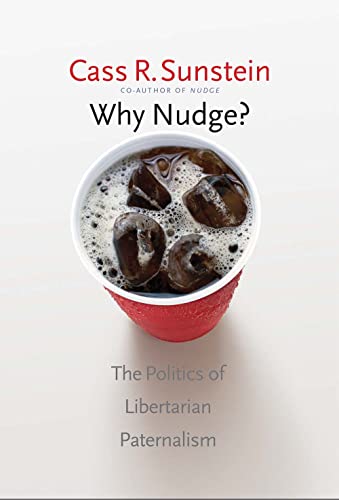
Why Nudge?

Unless there is harm to others, the government cannot exercise power over people. This is the John Stuart Mill's "Harm principle", sometimes called the Liberty Principle. And governments have taken as given that individuals always take decisions in a rational way, fulfilling their preferences. As Cass Sunstein says in his last book "Why Nudge?", such a principle "raises serious doubts about many laws and regulations. Sometimes power is exercised over people in large part to promote their own good, finally people are note entirely sovereign over their body and minds". He argues in favour of paternalism in certain circumstances. We have already explained such details formerly in this blog.
Today I would like to suggest a reading to you, an excellent editorial in the Canadian Medical Association Journal. It is a call for action on obesity and specifically on food policy and taxation on sugar-sweetened beverages.

Our current approach to obesity relies on the assumption that people have choices, often fail to make the right ones, and should be educated and helped to make better choices. This view is simplistic and clearly absurd, given the continued rise in the prevalence of obesity in countries that have been tackling the problem for decades. Are millions of people really choosing to be overweight?

People are not as free to choose as we would like to believe. Neurobiological desires for sweet and high-fat foods gave humans a survival advantage in a world where food was scarce and every calorie counted. Where food is inexpensive and easily available, biological processes related to eating can mirror addiction and will lead to our destruction. We need to change our approach. We need incentives beyond educational messages. Strategies that include individual interventions,  school-based nutrition and activity interventions, incentives for active commuting and changes to the built environment should continue; however, we also need robust ways to restrict portion sizes and reduce the sale of sugar-sweetened beverages and other high-calorie, nutrient-poor food products. Our government needs to consider taxation as a tool to combat the consumption of these addictive foods and beverages, just as it regulates the sale of alcohol and tobacco products for the purposes of population health.
In USA, Berkeley is the first city that will intoduce the soda-tax after a recent ballot. Berkeley’s Measure D proposed imposing a 1-cent-per-ounce general tax on sugar-sweetened beverages and sweeteners used to flavor drinks. The measure will not dedicate funding to a specific cause and did not require only a majority of the vote.
I still remember how a similar measure was discarded some years ago in our country. The times to reconsider the introduction of a soda tax are coming.


09 d’octubre 2015

Using behavioral insights for policy

Social and Behavioral Sciences Team 2015 Annual Report

Some weeks ago, an executive order by President Obama boosted the application of behavioral insights to policy.
To more fully realize the benefits of behavioral insights and deliver better results at a lower cost for the American people, the Federal Government should design its policies and programs to reflect our best understanding of how people engage with, participate in, use, and respond to those policies and programs. By improving the effectiveness and efficiency of Government, behavioral science insights can support a range of national priorities, including helping workers to find better jobs; enabling Americans to lead longer, healthier lives; improving access to educational opportunities and support for success in school; and accelerating the transition to a low-carbon economy.
Sounds interesting. It poses a tweak on the current approaches to policy design. Cass Sunstein says in NYT:
 When government programs fail, it is often because public officials are clueless about how human beings think and act. Federal, state and local governments make it far too hard for small businesses, developers, farmers, veterans and poor people to get permits, licenses, training and economic assistance.
 Behavioral research shows that efforts at simplification, or slight variations in wording, can make all the difference.
The UK and now the USA are introducing this new way to define policies (and health policy). Let's keep an eye on its application and performance. What are we doing in this respect? Why are we waiting to introduce something similar?

President Barack Obama speaks with members of the Social and Behavioral Sciences Team in the Oval Office in January 2015.
 President Barack Obama speaks with members of the Social and Behavioral Sciences Team in the Oval Office in January 2015.

25 de desembre 2016

The two friends story

THE TWO FRIENDS WHO CHANGED HOW WE THINK ABOUT HOW WE THINK

Sunstein and Thaler provide an excellent review of a unique book by MichaelLewis in New Yorker. This is my suggestion for reading today.

18 d’abril 2012

Breslow, en el record

Si avui situem els hàbits i comportaments saludables a la capçalera dels factors que determinen la qualitat de vida i la longevitat, ho devem en bona part a Lester Breslow que ens ha deixat a l'edat de 97 anys. Ell va ser qui va capgirar l'orientació de la salut pública i va ser capaç de redefinir-ne les prioritats. Tinc la impressió que ha costat molt que féssim cas dels seus missatges, però sens dubte a hores d'ara han calat, i encara han de calar més. Llegeixo al NYT la notícia i destaco:
Dr. Breslow’s most lauded accomplishment was a study of 6,928 people in Alameda County, Calif., that examined their behavior over intervals of up to 20 years. It used quantitative analysis to prove that a 45-year-old with at least six of the seven healthy habits Dr. Breslow chose as important had a life expectancy 11 years longer than someone with three or fewer. Over a 70-year career, Dr. Breslow helped expand the very definition of public health, from the historical concentration on communicable disease to a new concern with individual behavior and the effects of community and environment. As people lived longer and had more cancer and heart attacks, he was a leader in emphasizing the mounting importance of chronic disease.
Ell ens va donar la pista a seguir, i voldria pensar que Kahneman-Thaler-Sunstein han perfilat com. He de dir que ho han fet per ara de forma insuficient. Fa uns dies ja vaig dir que calia tenir en compte el que deia l'Adam Oliver al seu blog. Però també vull recordar que el Behavioural Insight Team ha perdut pistonada, caldrà veure quin és el motiu. Mentrestant rellegir Breslow i un repàs a la seva autobiografia “A Life in Public Health: An Insider’s Retrospective” esdevé clau per comprendre un científic fonamental del segle XX.

21 de maig 2021

Biases and noise, two kinds of error

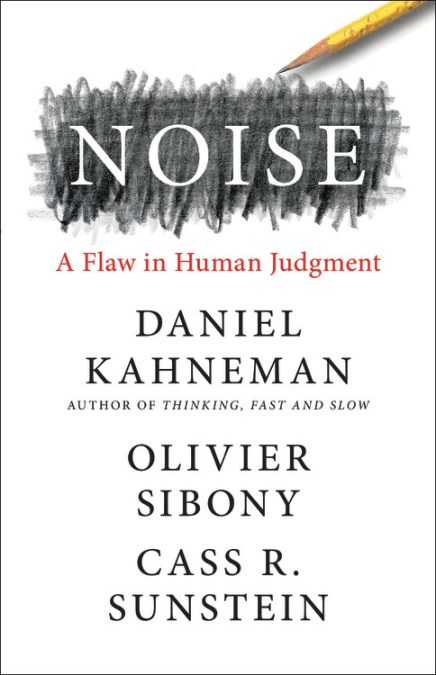
Noise, a flaw in human judgement

A new book by  Daniel Kahneman, Olivier Sibony, and Cass R. Sunstein

A general property of noise is that you can recognize and measure it while knowing nothing about the target or bias. The general property of noise is essential for our purposes in this book, because many of our conclusions are drawn from judgments whose true answer is unknown or even unknowable. When physicians offer different diagnoses for the same patient, we can study their disagreement without knowing what ails the patient. When film executives estimate the market for a movie, we can study the variability of their answers without knowing how much the film eventually made or even if it was produced at all. We don’t need to know who is right to measure how much the judgments of the same case vary. All we have to do to measure noise is look at the back of the target.

To understand error in judgment, we must understand both bias and noise. Sometimes, as we will see, noise is the more important problem. But in public conversations about human error and in organizations all over the world, noise is rarely recognized. Bias is the star of the show. Noise is a bit player, usually offstage. The topic of bias has been discussed in thousands of scientific articles and dozens of popular books, few of which even mention the issue of noise. This book is our attempt to redress the balance.