30 de març 2019

Medicine as a data science (6)

Adapting to Artificial Intelligence: Radiologists and Pathologists as Information Specialists

While some physicians are lobbying for creating more specialties, Jah and Topol argue exactly the opposite. Radiology, pathology and in vitro diagnostics should be under the same umbrella: "the information specialists":
Because pathology and radiology have a similar past and a common destiny,
perhaps these specialties should be mergedinto a single entity, the “information specialist,” whose responsibility will not be so much to extract information from images and histology but to manage the information extracted by artificial intelligence in the clinical context of the patient.
 There may be resistance to merging 2 distinct medical specialties, each of which has unique pedagogy, tradition, accreditation,and reimbursement.However, artificial intelligence will change these diagnostic fields. The merger is a natural fusion of human talent and artificial intelligence. United, radiologists and pathologists can thrive with the rise of artificial intelligence. 
The history of automation in the broader economy has a reassuring message. Jobs are not lost; rather, roles are redefined; humans are displaced to tasks needing a human element. Radiologists and pathologists need not fear artificial intelligence but rather must adapt incrementally to artificial intelligence, retaining their own services for cognitively challenging tasks.A unified discipline, information specialists would best be able to captain artificial intelligence and guide medical information to improve patient care.
You may agree or not. Technology is breaking barriers and creating bridges. Food for thought.


Josep Segú - Brooklyn Bridge

27 de març 2019

The deep side of medicine and the gift of time

Deep Medicine

Nowadays the impact of Artificial Intelligence in Medicine is unknown. Every other day you may hear about robots and how they will replace humans. Nobody knows about it, distrust charlatans. The only thing that is real is what is already happening. Eric Topol has tried to do this in his new book Deep Medicine. But at the same time he considers that AI will let physicians humanise medicine, "the gift of time", and says:
"As machines get smarter, humans will need to evolve along a different path from machines and become more humane"
This may be Eric Topol's desire, nothing to add. My view is quite different. I'm not sure about the contribution of AI to a humanised medicine . This has to do with professionalism, not with AI. And the incentives for professionalism are plunging, while commercialism is on the rise. This is the key issue.
The remaining elements of the book are of interest to explain the current state of advances in apps and tools for clinical decision making. You'll find helpful information and a great summary of AI in medicine. However, my suggestion is that you can forget the subtitle of the book: "How artificial intelligence can make healthcare human again". It's naïve.

PS. Amb IA l'anys 2026 faig aquest resum

El llibre "Deep Medicine: How Artificial Intelligence Can Make Healthcare Human Again" (2019), escrit pel cardiòleg i investigador Eric Topol, explora com la intel·ligència artificial (IA) pot transformar la pràctica mèdica i resoldre la seva gran crisi actual: la pèrdua de la relació humana entre metge i pacient.

Tesi central i el model de la "Deep Medicine"

La medicina moderna pateix de superficialitat (shallow medicine): visites precipitades, diagnòstics erronis, sobrediagnòstic i un ús massiu d'historials electrònics que han convertit els metges en administratius de teclat, generant taxes de burnout i depressió superiors al 50%.

Per superar aquesta crisi, Topol proposa el model de la Deep Medicine, basat en tres pilars interconnectats:

  1. Deep Phenotyping (Fenotipat profund): La caracterització digital i biològica completa de cada individu ("des del desig fins a la pols"), integrant genòmica, epigenòmica, microbioma, biosensors, historial clínic i entorn.
  2. Deep Learning (Aprenentatge profund): L'ús de xarxes neuronals profundes per analitzar masses de dades complexes, reconèixer patrons i generar prediccions precises.
  3. Deep Empathy (Empatia profunda): La recuperació de la connexió humana, el contacte físic, l'escolta activa i la confiança mútua entre metges i pacients, un factor que la IA fa possible en alliberar els professionals de les tasques burocràtiques i analítiques de rutina.


Capítol 1: Introduction to Deep Medicine

Topol comença amb la seva pròpia experiència traumàtica darrere d'una operació de genoll complicada. Malgrat l'èxit tècnic de la cirurgia, el seu metge va mostrar una falta absoluta d'empatia i d'anàlisi dels seus antecedents mèdics. L'autor exposa la necessitat d'integrar la IA en la Quarta Revolució Industrial per analitzar dades massives (Big Data) i, simultàniament, utilitzar el temps estalviat per humanitzar l'atenció mèdica.

Capítol 2: Shallow Medicine (Medicina superficial)

S'analitzen les patologies del sistema sanitari actual: dades insuficients, falta de temps i desconnexió emocional. L'autor denuncia l'ús ineficient dels historials electrònics de salut (EHR), el sobrediagnòstic (com el canvi de criteris de la hipertensió o les mamografies de cribratge que generen milers de falsos positius) i el fet que la majoria dels fàrmacs més venuts només funcionen en un percentatge molt reduït dels pacients que els prenen.

Capítol 3: Medical Diagnosis (El diagnòstic mèdic)

S'examinen els errors diagnòstics i els biaixos cognitius humans (heurístiques del Sistema 1 descrites per Kahneman i Tversky, com el biaix de confirmació o la representativitat). Es repassen eines d'ajuda diagnòstica com symptom checkers (Ada, Buoy, Isabel), aplicacions de crowdsourcing mèdic (Medscape Consult, Human Dx) i les lliçons de la fallida del projecte IBM Watson for Oncology, que va evidenciar la dificultat de processar dades mèdiques no estructurades.

Capítol 4: The Skinny on Deep Learning (El bàsic de l'aprenentatge profund)

A través de la història de l'aplicació AliveCor (capaç de detectar nivells de potassi a la sang i arítmies mitjançant un ECG a l'Apple Watch), Topol explica el funcionament de les xarxes neuronals profundes (DNN), l'aprenentatge supervisat, no supervisat i per reforç. Estableix un paral·lelisme clau entre els vehicles autònoms i la IA mèdica: la medicina mai superarà el Nivell 2 o 3 d'autonomia; la supervisió humana serà sempre imprescindible.

Capítol 5: Deep Liabilities (Les vulnerabilitats i riscs de la IA)

L'autor detalla els perills de la IA algorísmica: el problema de la "caixa negra" (black box) i la falta d'explicabilitat, els biaixos algorítmics (de gènere, raça o nivell socioeconòmic) basats en dades d'entrenament poc representatives, les amenaces a la privacitat (analitzant el cas de DeepMind i el NHS al Royal Free Hospital) i la necessitat d'assaigs clínics prospectius per validar els resultats obtinguts in silico.

Capítol 6: Doctors and Patterns (Els metges dels patrons)

S'analitzen les especialitats mèdiques basades en el reconeixement d'imatges i patrons visuals: Radiologia, Patologia i Dermatologia. Topol repassa estudis on els algorismes igualen o superen els metges en la detecció de càncer de pell (estudi de Stanford) o en l'anàlisi de biòpsies i radiografies. Rebutja la idea que aquests metges siguin substituïts; en canvi, la IA esdevindrà un assistent essencial i proposa la fusió de radiòlegs i patòlegs en la nova figura de l'Especialista de la Informació (Information Specialist).

Capítol 7: Clinicians Without Patterns (Clínics sense patrons)

Aborda les especialitats que no es basen en patrons visuals simples (atenció primària, oncologia, cirurgia, oftalmologia). La IA servirà per eliminar el tecleig mitjançant assistents de veu, processar dades de laboratori i genòmiques mitjançant el suport Mèdic Individualitzat Augmentat (AIMS), millorar el diagnòstic retinal (OCT), optimitzar tractaments oncològics complexos (projectes com Tempus Labs) i integrar la visió per computador en la cirurgia robòtica (Verb Surgical, "Surgery 4.0").

Capítol 8: Mental Health (Salut mental)

S'explora la paradoxa segons la qual moltes persones prefereixen confessar els seus problemes de salut mental a un agent virtual o chatbot (com Woebot o Wysa) abans que a un humà, per evitar sentir-se jutjades. Es detalla el concepte de fenotipat digital (Digital Phenotyping): l'ús de dades de tecleig, veu, patrons de son i xarxes socials per detectar de manera precoç episodis de depressió, ansietat o risc de suïcidi.

Capítol 9: AI and Health Systems (IA i els sistemes de salut)

Analitza com la IA pot predir la mortalitat a hospitals per millorar les cures pal·liatives (algoritmes de Stanford), preveure reingressos, detectar la sèpsia en temps real i gestionar el flux de treball hospitalari. Es descriu la transició cap a "hospitals virtuals" de monitoratge remot (com el Mercy Virtual Care Center) i es repassen les estratègies nacionals de IA en salut a països com el Canadà, la Xina i l'Índia.

Capítol 10: Deep Discovery (Descobriment profund en ciència)

Descriu la revolució de la IA en la investigació biomèdica bàsica: l'anàlisi del 98,5% del DNA no codificant (DeepSequence, DeepVariant, CRISPR/Elevation), el disseny accelerat de fàrmacs sense necessitat d'experimentació animal prèvia (Atomwise, BenevolentAI, Insilico Medicine) i la microscòpia d'alta resolució sense etiquetatat químic (in silico labeling).

Capítol 11: Deep Diet (La dieta profunda)

Topol demostra la fallida de les recomanacions nutricionals generals i de les dietes de moda. Basant-se en els estudis de Segal i Elinav (Weizmann Institute / DayTwo), s'explica com la resposta glicèmica als mateixos aliments varia dràsticament entre individus segons el seu microbioma intestinal, la qual cosa permet dissenyar una nutrició personalitzada guiada per IA.

Capítol 12: The Virtual Medical Assistant (L'assistent mèdic virtual)

Planteja el futur del "coach" de salut virtual: un assistent de veu integrat que rep, analitza i actualitza contínuament totes les dades de l'individu (genòmica, biosensors, estil de vida, historial mèdic) combinades amb tota la literatura científica. L'autor analitza els obstacles principals: la propietat de les dades per part del pacient, la gestió dels "falsos positius" (incidentalomes) i la necessitat de validació mitjançant assaigs clínics.

Capítol 13: Deep Empathy (Empatia profunda)

El capítol de tancament resumeix el missatge essencial del llibre: el gran regal de la IA a la medicina és el regal del temps. Si la tecnologia allibera els metges del treball administratiu, aquest temps s'ha de retornar als pacients per escoltar la seva història (evitant la interrupció mitjana que fan els metges als 18 segons), practicar l'observació, oferir confort i recuperar la presència i la confiança. Topol crida a una reforma profunda de l'educació mèdica per seleccionar i formar els futurs metges en funció de la seva intel·ligència emocional i empatia.

Conclusió

El model de Deep Medicine no pretén una medicina robotitzada, sinó utilitzar la tecnologia més avançada per restaurar el component més antic i valuós de la professió: el cura humà, la presència i l'empatia entre les persones.




22 de març 2019

The Theranos contretemps as a serious scandal (2)

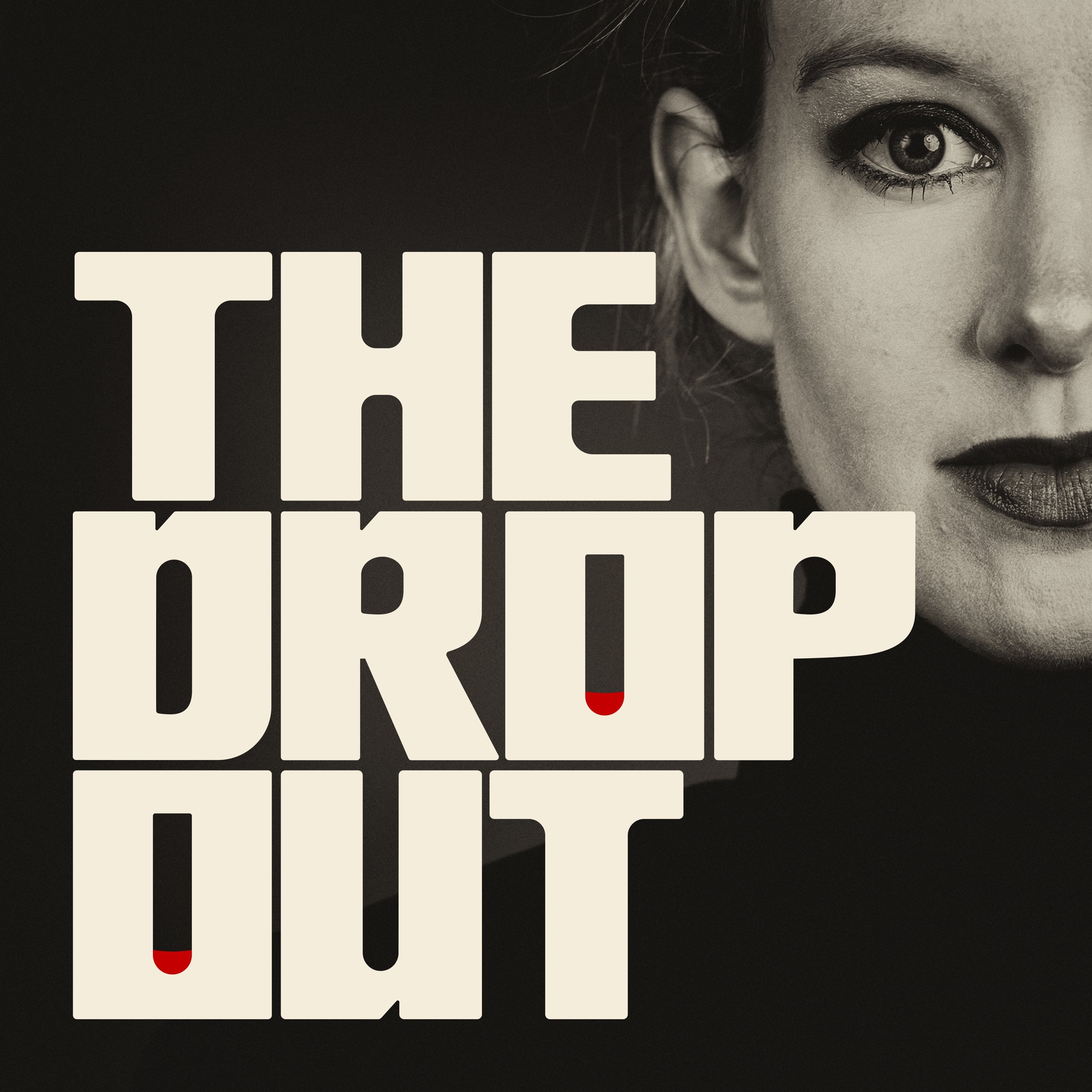
The DropoutPodcast by ABC Radio & ABC News Nightline

The inventor

Now you can hear the ABC radio podcast in 6 chapters on Theranos scandal. Report at The Verge. Highly recommended.


And the HBO new documentary explains all the details in 2 hours. The trailer:


20 de març 2019

#CRISPRWHO: notes on a new scandal

Open AccessOpen Access license
#CRISPRbabies: Notes on a Scandal

This week:
An advisory panel to the World Health Organization has called for the creation of a global registry to monitor gene-editing research in humans, the organization announced yesterday (March 19). The recommendations of the 18-person committee, which was established following news late last year that Chinese scientist He Jiankui had carried out human gene editing in secret, are aimed at improving transparency and responsibility in the field, the announcement says.
The panel’s advice did not go so far as to call for a moratorium on all human germline editing, unlike some other groups. Last week, a group of scientists and bioethicists from seven countries penned a commentary in Nature that argued for “a fixed period during which no clinical uses of germline editing whatsoever are allowed.” Such a moratorium would allow time for ethical and moral debate and for the agreement of an international regulatory framework, they wrote.
After the initial #CRISPRbabies scandal , we are facing a new one. The WHO pannel is asking for a registry instead of a moratorium. The battle has finished. Game over. From now on, the human being  will be affected from such decision. One of the worst decisions in the human history.


17 de març 2019

Improving the pharmaceutical regulation production function

Using Routinely Collected Data to Inform Pharmaceutical Policies

With the broadening of data available for officials to regulate markets, things could change. The issue is specially relevant for pharmaceuticals. Up to now if you want information about the market you have to use IMS data. Now governments that pay the drugs bill can use their own data to improve regulation. Better knowledge could represent better regulation if it is performed appropriately and on a timely basis. The OECD report tries to put all these elements together and highlight the opportunities ahead.
This report provides an overview of patient-level data on medicines routinely collected in health systems from administrative sources, e.g. pharmacy records, electronic health records and insurance claims. In total 26 OECD and EU member countries responded to a survey addressing the availability and accessibility of routinely collected data on medicines and their applicability to developing evidence. The report further explores the utility of evidence from clinical practice, looking at experiences and initiatives across the OECD and EU.
Governments will have to improve big data capabilities and add new talent.


08 de març 2019

Never ending health reforms

Reformas pendientes en la organización de la actividad sanitaria

A new issue of Cuadernos ICE shows the current state of the health system. You'll find an article that explains the main constraints to be overcome with all the details. Above all, in my opinion is the quality of institutions. The remaining articles are highly recommended as well.
We are living on a slippery slope and nobody cares about it, it seems that key decision makers have forgotten to read and accept facts as they are. I strongly suggest a reading of these articles. Something should be done to avoid having to rewrite the same a decade later, as it has happened. Maybe the reforms never end because they still have to start.
Take a chance, play your part. Don't wait too long.

PS. Facts (1) and (2)


You can cry a million tears 

You can wait a million years 

If you think that time will change your ways 

Don't wait too long
When your morning turns to night 

Who'll be loving you by candlelight

If you think that time will change your ways 

Don't wait too long
Maybe I got a lot to learn 

Time can slip away 

Sometimes you got to lose it all 

Before you find your way
Take a chance, play your part 

Make romance, it might brake your heart 

But if you think that time will change your ways 

Don't wait too long
It may rain, it may shine 

Love will age like fine red wine 

But if you think that time will change your ways 

Don't wait too long
Maybe you and I got a lot to learn 

Don't waste another day 

Maybe you got to lose it all 

Before you find your way
Take a chance, play your part 

Make romance, it might break your heart 

But if you think that time will change your ways 

Don't wait too long 

Don't wait 

Hmm... Don't wait

Compositors: Jesse Harris / Larry Klein / Madeline Peyroux


Definitely, this is the message

07 de març 2019

Revisiting the economic foundations of health insurance

Choose to Lose: Health Plan Choices from a Menu with Dominated Option

We know that more choice is not always better. Former posts have emphasized this issue. Loewenstein et al. provide remarkable evidence of what happens with health insurance:
Our findings offer perhaps the strongest evidence to date that insurance reveal as much or more about consumer understanding than about actual health-related risk preferences. In this sense, our setting provides a rare opportunity to conduct a specification check on
the standard insurance demand model absent search frictions.
Our findings challenge the standard practice of inferring risk preferences from insurance choices and raise doubts about the welfare benefits of health reforms that expand consumer choice.
If this is so, many books should be rewritten asap.

PS. G. Loeweinstein will be in Barcelona next week at Barcelona Jocs.


04 de març 2019

Pharma landscape

The Global Use of Medicine in 2019 and Outlook to 2023

The summary of IQVIA report:

  • Global spending on medicines reached $1.2 trillion in 2018 and is set to exceed $1.5 trillion by 2023.
  • Invoice spending in the United States is expected to grow at 4– 7% to $625–655 billion across all channels, but net manufacturer revenue is expected to be 35% below invoice and have growth of 3-6% as price growth slows on both an invoice and net basis.
  • Net drug prices in the United States increased at an estimated 1.5% in 2018 and are expected to rise at 0–3% over the next five years.
  • China reached $137 billion in medicine spending in 2018, but will see growth slow to 3-6% in the next five years as central government reforms to expand insurance access to both rural and urban residents, as well as expansions and modernizations of the hospital system and primary care services have been largely achieved and efforts shift to cost optimization and addressing corruption.
  • Medicine spending in Japan totaled $86 billion in 2018, however spending on medicines is expected to decline from -3 to 0% through 2023, due to the effect of exchange rates and continued uptake of generics and offset by the uptake of new products.
  • The number of new products launched is expected to increase from an average of 46 in the past five years to 54 through 2023, and the average spending in developed markets on new brands is expected to rise slightly to $45.8 billion in the next five years, but represent a smaller share of brand spending


01 de març 2019

Rescuing citizens from the "rule of rescue"

People feel a need to rescue identifiable individuals facing avoidable death or harm. This is a well known fact  explained in 1968 by the Nobel laureate Thomas Schelling from an economic perspective  and by Jonsen  in the bioethics context in 1986.
"A single death is a tragedy; a million deaths is a statistic." This quote reflects exactly what we are talking about. However, the issue is: Do you accept the rescue at any price with public money?
These previous posts of this blog: (1) and (2) explain the details. I'll not insist on what I've already said. I suggest you have a look at them.
Today you can asess these three facts:
1. A country spends 38m € in drugs for 249 patients in 2018. A lifetime treatment.
2. A country has a waiting list of 132.025 patients for surgery, 123.249 patients for diagnostic tests, and 424.715 patients waiting for a visit to the specialist. Total people waiting: 679.989 patients in a country with 7.543.825 inhabitants. 9% of the population is in the waiting list for a health service. However, 25% have voluntary duplicate insurance and could jump the list. Therefore the exact figure is 12% of inhabitants waiting.
3. A country knows that spending 10m € in addition every year can increase cardiac surgery by 600 interventions. This means 600 critical patients less in the waiting list. With 38m €, the number of cardiac interventions would be 2.280.
 Ask yourself what to do about it, what would you prefer to do with 38m€ every year ? Just apply them to 249 patients or to 2.280 (you are not on the waiting list, and we'll assume the same adjusted quality of life years for both cases). Anyway, it's too late to have your answer, the government has already decided for you, and maybe you don't agree with it, as I don't agree. The government prefers the rescue of 249 citizens.
Just to finish, check this final fact:
This country spends 1.192 € per capita of public budget on health. Another country under the same mandatory tax system is able to spend 1.635 €, 40% more !!!
More money allows to avoid such dilemmas for this country. Ask yourself if you want to stay in the former tax system that is damaging your health. Once you have the answer, you'll understand why this country wants to leave this unfair tax system as soon as possible.


23 de febrer 2019

Pharma returns

Measuring the return from pharmaceutical innovation 2018

Key findings for top 12 biopharma companies in the Deloitte study.
  • R&D returns have declined to 1.9 per cent, down from 10.1 per cent in 2010 - the lowest level in nine years
  • Returns have been impacted by the growing cost of bringing a drug to market which now stands at $2,168 million – almost double the $1,188 million recorded in 2010
  • Forecast peak sales have declined from last year to $407 million – less than half the 2010 value of $816 million
The growing cost of new drugs includes buying companies for their research (outsourcing research) instead of "producing" R&D within the company. The report will not tell you this minor observation.
Last February I said :
In drug industry the probability of R&D failure is 90.4%. We all know that in the drug costs we are paying also for failures, but we easily forget the figure.
You'll not find any reference to this minor issue. Is there any profitable industry with such a failure rate?


Caro Emerald

22 de febrer 2019

The bioethics of machine clinical decision making

Artificial intelligence (AI) in healthcare and research
Regulation of predictive analytics in medicine

This is what a brief note from Nuffield Council of Bioethics says about artificial intelligence in healthcare:
The use of AI raises ethical issues, including:
  • the potential for AI to make erroneous decisions; 
  • the question of who is responsible when AI is used to support decision-making; 
  • difficulties in validating the outputs of AI systems; inherent biases in the data used to train AI systems; 
  • ensuring the protection of potentially sensitive data; 
  • securing public trust in the development and use of AI; 
  • effects on people’s sense of dignity and social isolation in care situations; 
  • effects on the roles and skill-requirements of healthcare professionals; 
  • and the potential for AI to be used for malicious purposes.
A key challenge will be ensuring that AI is developed and used in a way that is transparent and compatible with the public interest, whilst stimulating and driving innovation in the sector.
This statement is naive.(From m-w, naive:  marked by unaffected simplicity : INGENUOUS). Up to now, have you seen any transparent algorithm available for imaging, triage or any medical app? For sure not. Therefore, the real key challenge is to stop introducing such algorithms -to ban apps- unless there is a regulatory body that takes into account the quality assurance or effectiveness side (sensitivity and specificity) and the required transparency for citizens.
Until now Nuffield has released only a brief. Let's wait for the report.
If you want a quick answer, check Science this week:
To unlock the potential of advanced analytics while protecting patient safety, regulatory and professional bodies should ensure that advanced algorithms meet accepted standards of clinical benefit, just as they do for clinical therapeutics and predictive biomarkers. External validation and prospective testing of advanced algorithms are clearly needed
 They explain the five standards and give rules and criteria for regulation. It is really welcome.


21 de febrer 2019

Pharm niche busters

The Information Pharms Race and Competitive Dynamics of Precision Medicine: Insights from Game Theory
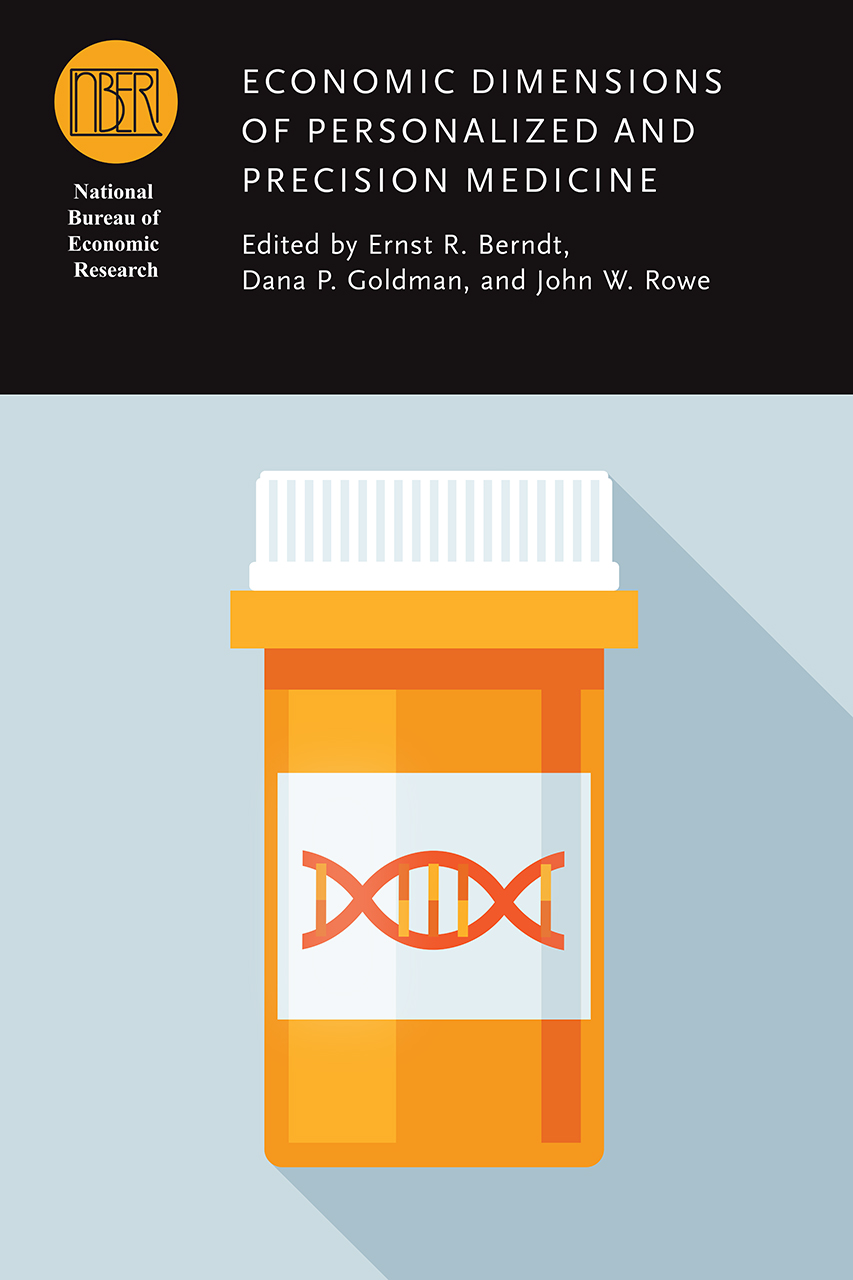
Economic Dimensions of Personalized and Precision Medicine
Precision medicines inherently fragment treatment populations, generating small-population markets, creating high-priced “niche busters” rather than broadly prescribed “blockbusters”. It is plausible to expect that small markets will attract limited entry in which a small number of interdependent differentiated product oligopolists will compete, each possessing market power.
A chapter in a new book on  Precision Medicine explains the new approaches to a oligopolistic market structure where the size of the market may be determined by biomarkers with a cut-off value suggested by pharmaceutical firms themselves. The dynamics of this market is described according to game theory. Sounds fishy at least.
I already have pending chapters to read of this book. A must read for physicians and economists.


16 de febrer 2019

Defining roles and skills for digital health

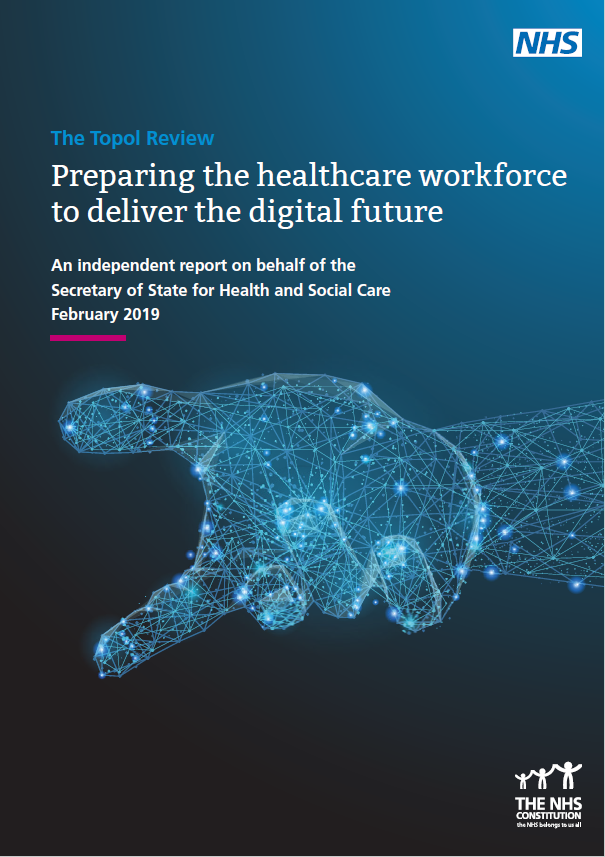
The Topol Review
Preparing the healthcare workforce to deliver the digital future.

The NHS asked Dr. Eric Topol about the new health workforce and how digital health will change the current landscape. A must read:
This is an exciting time for the NHS to benefit and apitalise on technological advances. However, we must learn from previous change projects. Successful mplementation will require investment in people as well s technology. To engage and support the healthcare workforce in a rapidly changing and highly technological orkplace, NHS organisations will need to develop a learning environment in which the workforce is given very encouragement to learn continuously. We must better understand the enablers of change and create culture of innovation, prioritising people, developing an agile and empowered workforce, as well as digitally capable leadership, and effective governance processes
to facilitate the introduction of the new technologies, supported by long-term investment.

15 de febrer 2019

Who is worse off?

Health, priority to the worse off, and time

The prioritisation of resource allocation towards the worse off is a well known rule. What does this mean exactly?
 There are many dimensions in which someone can be worse off (e.g., in terms of wellbeing, health, opportunities, resources), and there are many ways to give priority to someone (e.g., by giving extra weight to their claims, lexical priority to their claims, or by earmarking a fixed amount of resources for their claims). Furthermore, there are many different reasons why one might want to give priority to benefits to the worse off: is it because it is good to promote equality for its own sake, good to promote equality for other reasons, because benefits to the worse off matter more, because the worse off typically fall under some sufficiency threshold, or for many of these (and maybe other) reasons
The precise argument is described in a recent article that combines the complete lives approach with the forward looking approach, and says:
 I believe that the focus on complete lives has been beneficial in that it is a step away from a complete focus on current distributions of health. However, I think that the arguments presented in this paper give us reason to adopt a more nuanced approach to how to rank individuals in terms of who is worse off with the purpose of giving priority to certain benefits in light of unequal distributions of health over time. Such an approach accepts that both the complete lives view and the forward looking view that only takes into account current and future health states, matter. This leads to the complicated question of how to combine these views. Some work that addresses how to combine  concerns for simultaneous segment inequality and complete lives inequality has appeared recently, but the question needs further attention.
Therefore, it is still a work in progress.